
Kyoto Wagyu guide
The Origins of Wagyu
Kyoto Wagyu Guide Vol.5
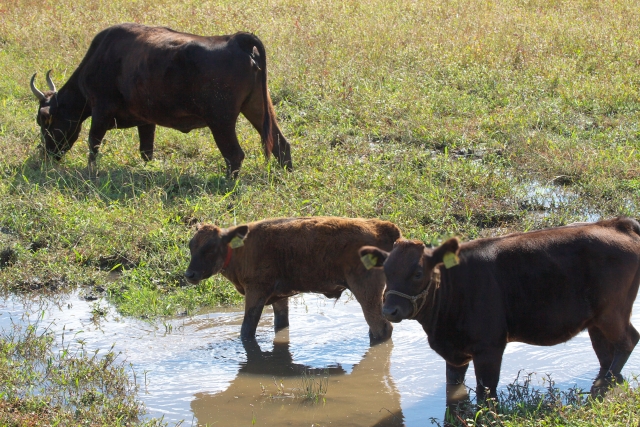
The Origins of Wagyu
From Japanese Cattle to the World-Famous Kobe Beef
When you enjoy a beautifully marbled Japanese Wagyu steak, have you ever wondered where it all began?
The story of Wagyu is much older and more complex than the famous names we see on restaurant menus today.
Kobe Beef, Omi Beef, Matsusaka Beef, and other regional Wagyu brands did not appear overnight.
They are the result of generations of cattle breeding, careful selection, regional traditions, and the dedication of Japanese farmers.
To understand Japanese Wagyu, it helps to go back to the beginning.
What Does “Wagyu” Actually Mean?
The word Wagyu (和牛) literally means “Japanese cattle.”
Today, the term officially refers to four recognized Japanese cattle breeds:
- Japanese Black (Kuroge Washu)
- Japanese Brown (Akage Washu)
- Japanese Shorthorn
- Japanese Polled
Among these, Japanese Black is by far the dominant breed in Japan’s premium Wagyu production.
Many famous brands, including Kobe Beef, Omi Beef, and Matsusaka Beef, are produced from Japanese Black cattle.
This is an important distinction:
Wagyu is not one single breed.
It is a group of recognized Japanese cattle breeds with a long history of selective breeding.
🐂 The Story of Japanese Black
Japanese Black cattle are particularly famous for their ability to develop fine intramuscular fat, creating the beautiful marbling associated with premium Japanese Wagyu.
Their bloodlines have been carefully maintained and improved over generations.
Farmers select cattle based on characteristics such as growth, meat quality, marbling, and lineage.
This long-term approach to breeding is one of the foundations of modern Japanese Wagyu.
The exceptional marbling you see on an A5 Wagyu steak is therefore not simply the result of how the animal was raised.
Genetics come first.
🏔️ What Is Tajima Cattle?
Now we come to one of the most important names in the story of Kobe Beef:
Tajima cattle.
Tajima cattle are Japanese Black cattle associated with Tajima, the northern part of Hyogo Prefecture.
The Tajima region is known for producing cattle with highly valued characteristics, and Tajima bloodlines have played an important role in the development of premium Wagyu.
Most importantly, Kobe Beef comes from cattle of the Tajima lineage.
This means that when you enjoy authentic Kobe Beef, you are experiencing a very specific branch of Japan’s Wagyu history.
Kobe Beef & Tajima Cattle — What’s the Connection?
This is a point that often causes confusion for international visitors.
Tajima cattle and Kobe Beef are not exactly the same thing.
Tajima refers to the cattle lineage and regional cattle tradition.
Kobe Beef is a certified brand of beef that must meet strict requirements.
Only beef from eligible Tajima-lineage Japanese Black cattle that satisfies the required standards can be officially certified as Kobe Beef.
So the relationship can be understood like this:
Japanese Black → Tajima lineage → eligible cattle → Kobe Beef
This is one reason the name “Kobe Beef” carries such a strong reputation around the world.
Is All Wagyu From Tajima Cattle?
No.
This is an important misconception.
Not all Japanese Wagyu comes from Tajima cattle.
Tajima lineage is particularly important to Kobe Beef, but Japan has many other Wagyu bloodlines and regional traditions.
For example, premium Wagyu from different regions can have different genetic backgrounds, production methods, and characteristics.
This diversity is one of the most fascinating aspects of Japanese Wagyu.
Rather than being one uniform type of beef, Wagyu is a world of different regional traditions and bloodlines.
From Local Cattle to Famous Wagyu Brands
Over generations, Japanese farmers and producers developed regional Wagyu traditions.
Different areas became known for their own cattle, production methods, and quality standards.
Eventually, these regional traditions became famous brands such as:
Kobe Beef — Hyogo
Omi Beef — Shiga
Matsusaka Beef — Mie
Today, these names are recognized around the world.
But behind every famous brand is a much longer story of cattle breeding, farmers, regional culture, and careful production.
Why Does Bloodline Matter So Much?
One reason Wagyu is so different from ordinary beef is the importance placed on bloodline and traceability.
Japanese Wagyu cattle are carefully registered and tracked.
Information about their lineage and individual identification allows producers and consumers to trace the history of the animal.
This traceability is an important part of Japan’s Wagyu system.
It also helps protect the reputation of famous regional brands.
When you see an authentic Wagyu brand name, you are not simply looking at a marketing label.
You are looking at a product connected to a specific production system and history.
💡 Did You Know?
Japan has developed one of the world's most detailed systems for identifying individual cattle.
Each registered Japanese cattle receives an individual identification number, allowing its production history to be traced.
This system helps support the authenticity and traceability of Japanese beef.
For international visitors, this is one of the fascinating differences between simply eating “beef” and experiencing a carefully documented Japanese Wagyu tradition.
Why Does This History Matter When You Eat Wagyu?
You may wonder:
Does knowing the bloodline really change the taste?
Not directly.
But understanding the history can change the way you experience the steak.
When you enjoy Kobe Beef, you are tasting the result of generations of selective breeding and careful production.
When you try Omi Beef, you are experiencing a different regional Wagyu tradition.
And when you compare different brands or cuts, you begin to understand that Japanese Wagyu is not simply about marbling.
It is about genetics, region, craftsmanship, and tradition.
From Tajima to Kobe, From Japan to the World
The story of Japanese Wagyu is not the story of one single breed or one single region.
It is a story of many bloodlines, generations of farmers, regional traditions, and continuous craftsmanship.
And within that larger story, Tajima cattle hold a particularly important place in the history of Kobe Beef.
The next time you enjoy a beautifully marbled Kobe Beef steak, take a moment to remember that you are tasting more than premium beef.
You are tasting a small part of a much longer Japanese story.
Discover the history.
Discover the craftsmanship.
Discover the story behind Japanese Wagyu.