
Kyoto Wagyu guide
Why Does Japanese Wagyu Taste Better with Simple Seasonings?
Kyoto Wagyu Guide Vol.9
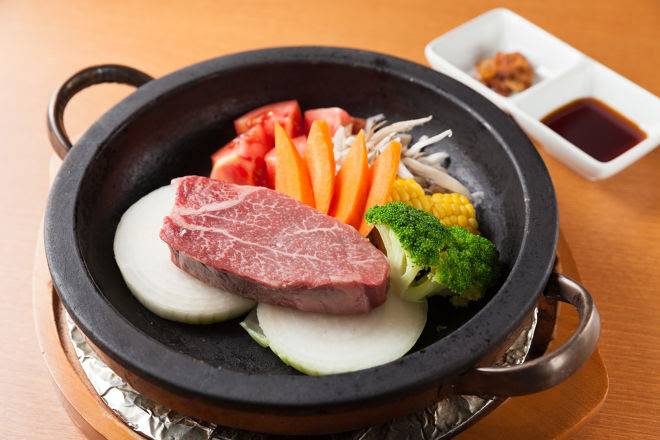
Why Does Japanese Wagyu Taste
Better with Simple Seasonings?
How We Cook and Enjoy Wagyu at YAKINIKU STEAK IWAI
Does premium Wagyu really need butter, oil, or a strong steak sauce?
When you order authentic Japanese Wagyu in Japan, you may notice something different.
At YAKINIKU STEAK IWAI, we do not add unnecessary oil, cooking oil, or butter when grilling our steaks.
Why?
Because we want you to experience the natural umami, aroma, sweetness, and rich flavor of the Wagyu itself.
The goal is not to add more flavor. It is to bring out the flavor that is already there.
🥩 We Don't Add Extra Fat
Premium Wagyu already contains beautifully distributed fat.
So instead of adding butter or oil to the cooking process, we allow the Wagyu's own natural fat to melt during cooking.
This is especially important with highly marbled A5 Wagyu.
As the steak heats, the natural fat begins to melt, creating aroma, juiciness, and the characteristic richness of Wagyu.
For our Heifer Wagyu, the fat can have a particularly delicate quality and a relatively low melting point, contributing to its famous melt-in-your-mouth texture.
The richness comes from the Wagyu itself—not from added butter or oil.
🔥 Our Special Heated Stone Plate
There is another important part of the experience:
The stone plate.
Our steaks are served on a special heated stone plate with excellent heat retention.
The stone's far-infrared radiation helps heat transfer evenly into the meat, helping create a beautifully seared surface while keeping the inside juicy and tender.
Because the stone retains heat so well, the steak stays warm longer throughout your meal.
This allows you to enjoy the aroma, texture, and flavor of the Wagyu from the first bite to the last.
🥬 And Don't Forget the Vegetables
There is one more delicious part of this cooking method that many guests discover only after trying it.
As the Wagyu cooks, its natural fat melts onto the heated stone.
The vegetables served alongside the steak can absorb some of this flavorful Wagyu fat.
The result?
Vegetables with the rich aroma and flavor of Wagyu.
For many guests, this becomes an unexpected favorite.
You are not simply eating steak and vegetables separately.
The natural flavor of the Wagyu becomes part of the entire plate.
🧂 So Why Keep the Seasoning Simple?
This is exactly why we recommend starting with simple seasonings.
Salt → Wasabi & Salt → Original Sauce
Start with salt.
This lets you experience the natural flavor of the beef, including its umami, aroma, texture, and Wagyu fat.
Then try wasabi with salt.
The fresh, sharp character of wasabi creates a refreshing contrast to the richness of the Wagyu.
Finally, try our original sauce for a deeper, savory flavor.
The steak hasn't changed.
But your experience of it has.
🌿 Don't Cover the Wagyu. Discover It.
In many Western steak traditions, butter, oil, pepper, or rich sauces can play an important role.
These can all be delicious.
But premium Japanese Wagyu offers another approach:
Don't cover the steak. Discover it.
Taste the Wagyu first.
Then gradually add seasoning.
This allows you to understand how each ingredient changes the experience.
💡 Try This on Your First Visit
If this is your first time eating authentic Japanese Wagyu, try this simple experiment.
First bite: Salt only.
What does the Wagyu itself taste like?
Second bite: Wasabi + Salt.
How does the freshness of wasabi change the richness?
Third bite: Original Sauce.
How does the sauce change the umami?
Then try some of the vegetables that have absorbed the natural Wagyu fat from the steak.
You may discover that even the vegetables taste completely different.
🇯🇵 A Different Way to Experience Steak
Japanese Wagyu is not simply about finding the most expensive steak.
It is about understanding the ingredient and allowing its natural qualities to come forward.
The breed.
The brand.
The cut.
The marbling.
The fat.
The cooking method.
The temperature.
And even the seasoning.
All of these details can change the experience.
At YAKINIKU STEAK IWAI, we believe that great Wagyu should be enjoyed without unnecessary additions that hide its natural character.
Let the Wagyu speak for itself.
How We Recommend Enjoying Wagyu at Iwai
Our chef prepares each steak according to its individual cut and characteristics.
For premium Wagyu, we recommend Rare to Medium Rare to appreciate its tenderness, aroma, and natural flavor.
The steak is then served on our special heated stone plate, where its own natural fat continues to melt and develop the aroma and flavor.
Then enjoy it in stages:
Salt → Wasabi & Salt → Original Sauce
And don't forget the vegetables.
The Wagyu's natural fat can give them an incredibly rich and savory flavor.
🌿 A 100% Gluten-Free Wagyu Experience
At YAKINIKU STEAK IWAI, all food served at our restaurant is 100% gluten-free, including our sauces, dressings, and seasonings.
Our food preparation area is separate from the area used for drinks that may contain gluten, and our glassware is clearly separated as well.
This allows guests who need to avoid gluten, including those with celiac disease, to enjoy authentic Japanese Wagyu with greater peace of mind.
We believe dietary considerations should never mean compromising on flavor.
Discover Wagyu in Its Natural Form
Premium Wagyu does not need butter.
It does not need extra cooking oil.
And it does not need a heavy sauce to make it delicious.
The Wagyu already has its own:
Umami.
Aroma.
Sweetness.
Richness.
Tenderness.
Our job is simply to bring those qualities to the surface.
From the special heated stone plate to the natural Wagyu fat, from the vegetables to the simple seasonings, every part of the experience is designed to help you discover what authentic Japanese Wagyu can really taste like.
Salt → Wasabi & Salt → Original Sauce
Start simple.
Taste the Wagyu.
Then discover the difference.
Experience authentic Japanese Wagyu in Kyoto at YAKINIKU STEAK IWAI.
Why We Choose Heifer Wagyu
Kyoto Wagyu Guide Vol.8
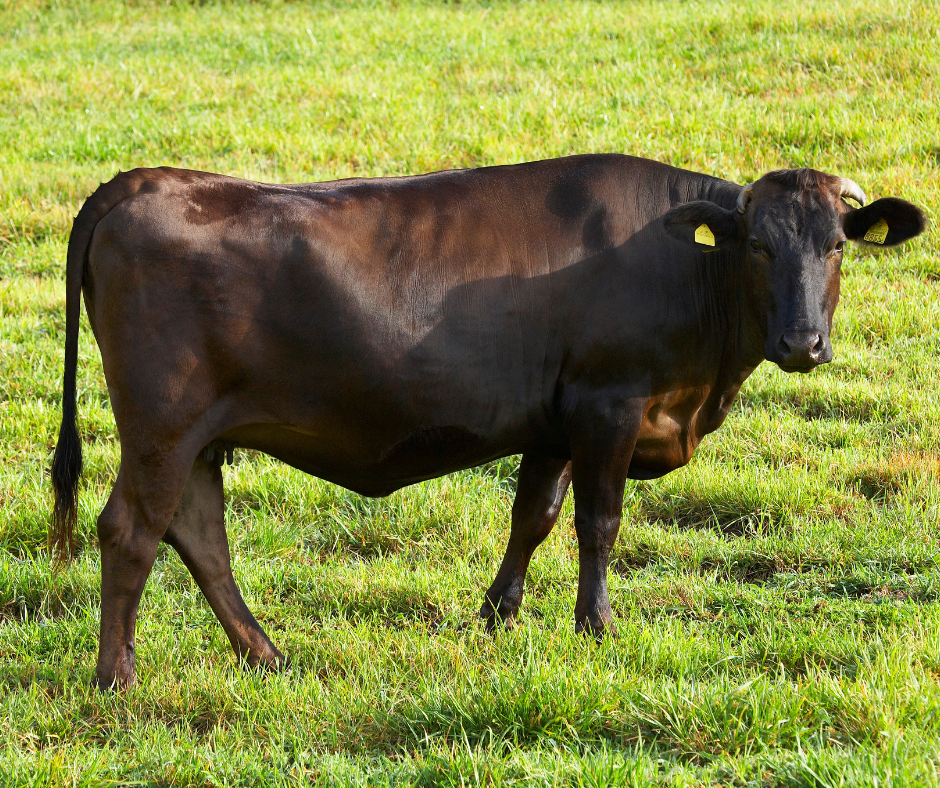
Why We Choose Heifer Wagyu
The Secret Behind the Tenderness, Flavor & Melt-in-Your-Mouth Fat
Have You Ever Wondered Why Some Wagyu Simply Melts in Your Mouth?
When international visitors try authentic Japanese Wagyu for the first time, one reaction we hear again and again is:
“How can a steak be this tender?”
The answer is not simply A5.
There is much more behind the texture and flavor of premium Japanese Wagyu—including the cattle's genetics, how they are raised, the cut, the marbling, and even whether the animal is male or female.
At YAKINIKU STEAK IWAI, all of our A5 branded Wagyu is carefully selected from Heifers — female cattle that have never given birth.
Why does this matter?
Let's take a closer look.
🐂 Heifer vs. Steer: What's the Difference?
You may have seen the words Heifer or Steer when learning about beef.
A Heifer is a female cattle that has never given birth.
A Steer is a male cattle that has been castrated at a young age and raised for beef production.
Both can produce excellent beef, but they can have different characteristics.
Steers tend to grow larger and produce more meat, which is one reason they are widely used in commercial beef production.
Heifers, on the other hand, can develop particularly fine-textured meat with a delicate character.
And when beautifully marbled Heifer Wagyu is produced, it can be especially valuable and rare.
🥩 Why Is Heifer Wagyu So Special?
One of the characteristics often associated with premium Heifer Wagyu is its fine, delicate meat texture.
The muscle fibers can be fine and tender, creating a remarkably soft eating experience.
But the difference becomes especially interesting when we talk about fat.
Wagyu is famous for its beautiful marbling, but the quality of that fat matters just as much as the amount.
Heifer Wagyu can contain a high proportion of unsaturated fatty acids, including oleic acid.
Oleic acid is a monounsaturated fatty acid also found in foods such as olive oil and sesame oil.
This contributes to one of the most distinctive characteristics of premium Wagyu:
Its remarkably low melting point.
🔥 Why Does Wagyu “Melt” in Your Mouth?
Have you ever touched a beautifully marbled Wagyu steak and noticed how quickly the fat begins to soften?
The fat in premium Wagyu can have a remarkably low melting point.
This is one of the reasons Wagyu can create that famous “melt-in-your-mouth” sensation.
When the warm temperature of your mouth meets the finely distributed Wagyu fat, it begins to melt, releasing aroma and flavor throughout the meat.
This is very different from simply having a steak with a large amount of visible fat.
The magic is not only how much fat there is, but what kind of fat it is and how it is distributed.
✨ Why Is Beautiful Heifer Marbling So Valuable?
There is another reason we pay attention to Heifer Wagyu.
Beautiful, evenly distributed marbling is not always easy to achieve in Heifers.
When a Heifer develops fine, balanced, beautifully distributed marbling, it can become particularly rare and valuable.
This is why the visual quality of Wagyu should not be judged simply by asking:
“How much marbling does it have?”
Instead, look at:
- How fine the marbling is
- How evenly it is distributed
- The quality of the fat
- The texture of the meat
- The balance between meat and fat
In other words:
Beautiful Wagyu is about the quality of the marbling, not simply the quantity.
🐂 What About Steers?
Steers are extremely important in the Japanese beef industry.
Because they can grow larger and produce more meat, they offer stable production and are widely used for premium beef as well.
Their beef can also be beautifully marbled and delicious.
Compared with Heifer Wagyu, however, the texture and fat characteristics can sometimes be different, with a slightly firmer or cleaner eating character.
This is not about one being universally “better.”
It is about understanding that the animal itself can influence the character of the beef.
🇯🇵 Why Does YAKINIKU STEAK IWAI Choose Heifer Wagyu?
This is where our philosophy becomes important.
At YAKINIKU STEAK IWAI, all of our A5 branded Wagyu is selected from Heifers.
We choose them because we value the characteristics that make premium Heifer Wagyu so special:
Fine meat texture.
Delicate, high-quality marbling.
Rich umami.
A softer, lower-melting-point fat.
And the exceptional mouthfeel created when these characteristics come together.
We don't choose Wagyu simply because it carries an A5 label.
We look deeper.
We consider the cattle, the marbling, the cut, the texture, and the quality of the fat.
For us, A5 is only the beginning of the selection process.
💡 A Famous Example: Matsusaka Beef
One interesting example is Matsusaka Beef.
Matsusaka Beef is one of Japan's most famous Wagyu brands, and its production standards place particular importance on female cattle that have not given birth.
This is one reason Heifer Wagyu has long been valued in Japan's premium Wagyu culture.
It also shows that when Japanese Wagyu producers talk about quality, the animal itself matters—not just the grade.
So, Is Heifer Wagyu “Better”?
The answer is more nuanced than simply saying yes or no.
Steer and Heifer Wagyu can both produce excellent beef.
But they can offer different characteristics.
For us, the delicate texture, rich flavor, distinctive fat, and melt-in-your-mouth quality of carefully selected Heifer Wagyu are exactly what we want our guests to experience when they visit Kyoto.
And when that Wagyu is also A5 grade and beautifully marbled, the result can be truly exceptional.
🥩 The Next Time You See A5 Wagyu...
Don't just look at the A5.
Ask:
What breed is it?
Where is it from?
What cut is it?
How is the marbling distributed?
And if you're interested in the details:
Is it a Heifer or a Steer?
These details can tell you much more about what you are about to experience.
At YAKINIKU STEAK IWAI, we believe that understanding these differences makes eating Wagyu even more enjoyable.
Because authentic Japanese Wagyu is not simply about eating expensive beef.
It is about discovering why the beef tastes the way it does.
Experience Authentic A5 Heifer Wagyu in Kyoto
Located near Nijo Castle in Kyoto, YAKINIKU STEAK IWAI specializes in carefully selected Japanese Wagyu, including Kobe Beef and Omi Beef.
All of our A5 branded Wagyu is selected from Heifers, chosen for their exceptional meat quality and distinctive characteristics.
From the fine marbling to the delicate texture and melt-in-your-mouth fat, every detail contributes to the unique experience of authentic Japanese Wagyu.
And this is why we believe:
A5 is not the end of the story.
It is where the Wagyu story begins.
Your First Japanese Wagyu Steak
Kyoto Wagyu Guide Vol.7
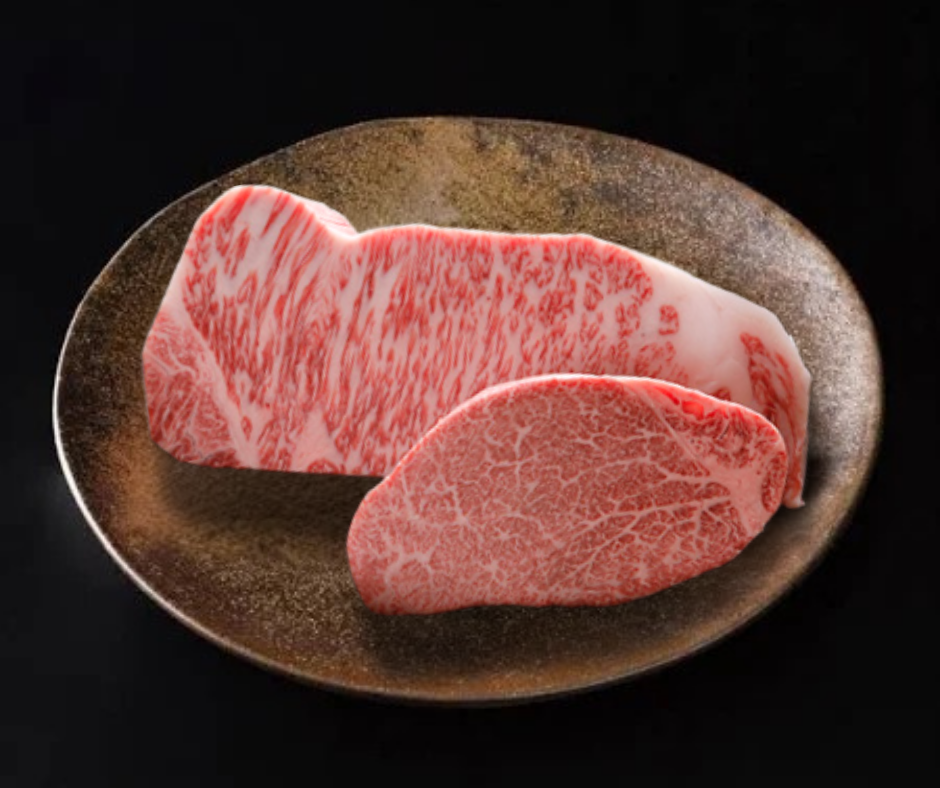
Your First Japanese Wagyu Steak
Why Trying Two Different Cuts May Be the Best Choice
If you have eaten steak in the United States, Europe, Australia, or elsewhere, you may already think you know what a great steak tastes like.
But there is something important to know before ordering Japanese Wagyu in Japan:
Authentic Japanese Wagyu can be a completely different experience from the steak you are used to.
The texture can be different.
The aroma can be different.
The richness can be different.
Even the way the fat melts in your mouth can feel completely unfamiliar.
For many international visitors, their first experience of authentic A5 Kuroge Wagyu is not simply “a better steak.”
It can feel like discovering an entirely different category of beef.
And that is exactly why choosing your first Wagyu steak matters.
🥩 Japanese Wagyu Is Not Just “A Better Steak”
In many countries, a premium steak is appreciated for its balance of tenderness, beef flavor, and juiciness.
Japanese Wagyu has another defining characteristic:
intramuscular marbling.
The fine fat distributed throughout the meat gives premium Wagyu its incredibly soft texture, rich aroma, and distinctive mouthfeel.
For someone trying authentic Japanese Wagyu for the first time, this can be surprising.
A highly marbled A5 Wagyu Sirloin may be so rich that you find it difficult to eat a large portion.
And that does not mean you don't like Wagyu.
It simply means that your palate may not yet be accustomed to this style of beef.
Think about sushi.
The most expensive piece is not necessarily the one everyone wants to eat the most of.
Some people love Otoro, the richly fatty tuna belly.
Others may find it too rich and prefer a leaner cut.
Japanese Wagyu can be similar.
What If A5 Sirloin Feels Too Rich?
This is one of the reasons we believe choosing the right combination is so important.
A5 Kobe Beef Sirloin is an extraordinary steak.
It is beautifully marbled, juicy, rich, and full of the luxurious character that makes Japanese Wagyu famous around the world.
But because of that richness, some first-time Wagyu diners may find that a full portion feels heavier than expected.
You may love the first few bites and think:
“This is incredible.”
But after several more bites, you may start thinking:
“This is richer than I expected.”
That is a completely normal reaction.
And it is one reason we don't believe that “the highest grade” automatically means “the best choice for everyone.”
👑 What Makes Chateaubriand Different?
This is where Chateaubriand becomes especially interesting.
Chateaubriand is the prized center portion of the tenderloin and is one of the most sought-after steak cuts.
It is exceptionally tender and remarkably rare.
But there is another important difference:
Tenderloin is primarily a lean meat cut, rather than a heavily marbled cut like sirloin.
This creates a completely different eating experience.
While A5 Kobe Beef Sirloin gives you the richness and juiciness of abundant marbling, Omi Beef Chateaubriand offers exceptional tenderness with a much lighter, more delicate character.
For guests who are not accustomed to heavily marbled Wagyu, this contrast can be particularly enjoyable.
You experience the richness of Wagyu without having the entire meal dominated by it.
And because Chateaubriand is such a precious and limited cut, you may also find yourself thinking:
“I wish there were just a little more.”
That is exactly why we believe these two cuts work so well together.
🥩 + 👑 Why We Recommend Both
At YAKINIKU STEAK IWAI, one of our most recommended experiences is a set featuring:
A5 Kobe Beef Sirloin
Rich, juicy, and beautifully marbled
Omi Beef Chateaubriand
Lean, exceptionally tender, and incredibly rare
These steaks are not simply two different cuts.
They represent two completely different sides of Japanese Wagyu.
The Kobe Beef Sirloin lets you experience the rich, luxurious marbling that makes Japanese Wagyu famous.
The Omi Beef Chateaubriand lets you experience the other side of Wagyu: a leaner cut with extraordinary tenderness and a delicate texture.
One is rich and juicy.
The other is refined, leaner, and exceptionally tender.
And because you are enjoying both in a carefully balanced portion, you can experience the richness of the sirloin without feeling overwhelmed, while still enjoying enough Chateaubriand to appreciate its unique character.
This is not simply a combination of two expensive steaks.
It is a combination designed to help you understand Japanese Wagyu.
Why Not Just Choose One?
Imagine ordering a full portion of A5 Kobe Beef Sirloin.
If you are new to Japanese Wagyu, you may find the richness more intense than expected.
Now imagine ordering only Chateaubriand.
You may absolutely love its tenderness and delicate flavor, but because it is such a precious cut, you might finish it wishing you could experience more of that rich, marbled Wagyu character.
The combination gives you both.
You can enjoy the richness and juiciness of premium Wagyu.
Then move to the lighter, incredibly tender Chateaubriand.
The contrast makes each cut more enjoyable.
And just when you think you could eat a little more of each...
the meal is perfectly balanced.
Our goal is not simply to give you the largest portion of the most expensive beef.
Our goal is to give you an experience that allows you to understand why Japanese Wagyu is so special.
💡 Your First Wagyu Experience Should Be About Discovery
If this is your first time eating authentic Japanese Wagyu, we recommend thinking about your meal differently.
Please ask:
“What will allow me to understand Japanese Wagyu?”
For many international visitors, the answer is more than one cut.
By comparing two very different steaks, you can discover:
- How marbling changes texture
- How fat affects flavor and mouthfeel
- How tenderness can come from a different kind of cut
- How different Wagyu brands can taste
- Why Japanese Wagyu can feel so different from familiar Western-style steaks
This turns your dinner into a genuine Wagyu tasting experience.
A Simple Guide for First-Time Wagyu Diners
❤️ If you love rich, juicy steak:
A5( Kobe Beef,Omi beef etc.. ) Sirloin
Expect intense marbling, richness, juiciness, and the luxurious mouthfeel associated with premium Japanese Wagyu.
🤍 If you prefer a leaner, exceptionally tender steak:
A5( Kobe Beef,Omi beef etc.. ) Chateaubriand
Expect extraordinary tenderness, a delicate texture, and the experience of one of the rarest premium steak cuts.
🥩 If this is your first authentic Japanese Wagyu experience:
Kobe Beef Sirloin + Omi Beef Chateaubriand
Experience both sides of Wagyu and discover which characteristics you enjoy most.
What About the Fat in A5 Wagyu?
If you look at beautifully marbled A5 Wagyu and think,
“Isn't that too much fat?”
You are not alone.
For many international visitors, the amount of marbling in Japanese Wagyu can look completely different from the steak they are used to.
But there is an important point that is often overlooked:
Not all beef fat is the same.
At YAKINIKU STEAK IWAI, we specifically select A5 Wagyu from female(Heifer) cattle because we value the quality and characteristics of their fat.
Fat from Heifer Wagyu is known for its high content of oleic acid, a type of monounsaturated fatty acid also found in foods such as olive oil, sesame oil, and fish oils.
In other words, when we talk about Wagyu fat, it is not simply about “how much fat” there is.
The quality and composition of the fat matter too.
This is one of the reasons we do not want our guests to look at beautiful Wagyu marbling and simply think:
“Fatty = unhealthy.”
We carefully choose Heifer A5 Wagyu because we believe that the character of its fat is an important part of what makes premium Japanese Wagyu so special.
In the next edition of Kyoto Wagyu Guide, we will take a closer look at Wagyu fat, oleic acid, and why the fat in premium Japanese Wagyu is so different from what you may expect.
How Should You Eat Them?
Premium Japanese Wagyu is also about how you taste it.
At YAKINIKU STEAK IWAI, our chef prepares each steak according to its individual characteristics.
For premium Wagyu, we recommend Rare to Medium Rare, allowing you to experience the natural aroma, tenderness, and flavor of the meat.
Each steak is served on a special heated stone plate, helping it stay warm throughout the meal.
We recommend trying it in stages:
Salt → Wasabi & Salt → Original Sauce
Start simply.
Taste the beef itself.
Then add wasabi and salt.
Finally, try our original sauce.
You may be surprised by how differently the same steak tastes with each combination.
The Best Wagyu Experience Is Not Always the Richest One
This is perhaps the most important lesson for first-time Wagyu diners.
More marbling does not automatically mean more enjoyment.
A5 Wagyu Sirloin can be extraordinary, but its richness may be more intense than what some international visitors expect.
Chateaubriand can be incredibly tender and refined, but its appeal is completely different.
By experiencing both, you can appreciate the contrast rather than trying to decide which one is “better.”
And that is what we believe Japanese Wagyu is really about:
discovering what you personally enjoy.
Experience Two Sides of Japanese Wagyu in Kyoto
At YAKINIKU STEAK IWAI, near Nijo Castle in Kyoto, we carefully select premium A5 Kuroge Wagyu, including Kobe Beef and Omi Beef.
Among our most recommended experiences is our Kobe Beef Sirloin & Omi Beef Chateaubriand set.
We created this combination specifically to help guests experience two very different characteristics of premium Japanese Wagyu in one meal.
You can enjoy the rich, juicy marbling of Kobe Beef Sirloin and the extraordinary tenderness and rarity of Omi Beef Chateaubriand.
Neither needs to compete with the other.
Together, they complete the experience.
For someone eating authentic Japanese Wagyu for the first time, this may be one of the best ways to discover what makes Japanese Wagyu so different from the steak you already know.
Rather than choosing a steak based solely on price,
Choose the experience that lets you discover Wagyu.
Rich. Tender. Different.
Experience both sides of authentic Japanese Wagyu in Kyoto, Japan.
How to Choose Your Wagyu Steak
Kyoto Wagyu Guide Vol.6
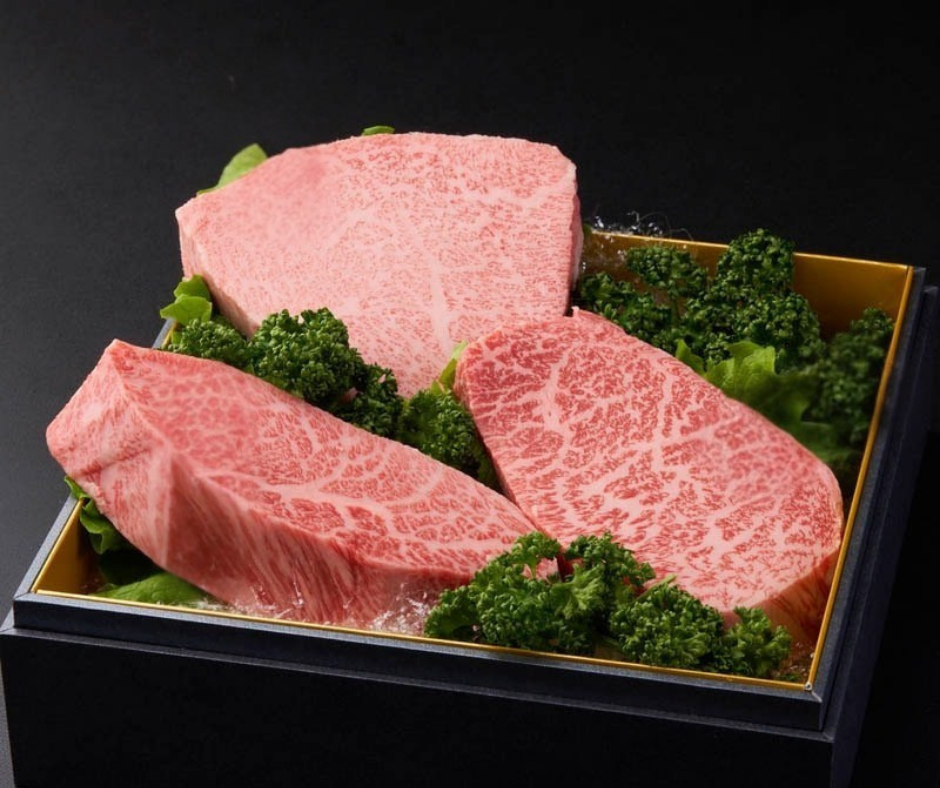
How to Choose Your Wagyu Steak
A Simple Guide to Choosing the Right Wagyu in Kyoto
You’ve learned what Wagyu is, why it is famous for its beautiful marbling, how different cuts compare, and what makes brands such as Kobe Beef and Omi Beef special.
But eventually, there is one question every Wagyu beginner asks:
“So, which Wagyu steak should I actually try?” 🥩
With so many grades, brands, and cuts on Japanese menus, choosing your first Japanese Wagyu steak can feel confusing.
The good news?
You don't need to be a Wagyu expert.
Understanding three things can make your choice much easier:
Grade. Brand. Cut.
① Grade: What Does A5 Actually Mean?
You may have seen A5 Wagyu on Japanese menus.
But what does A5 actually mean?
The “A” refers to the yield grade—the amount of usable meat obtained from the animal.
The “5” refers to the meat quality grade, which considers factors including marbling, meat color and brightness, firmness and texture, and the quality and color of the fat.
So remember:
A5 is a quality grade—not a breed or a brand.
A5 Wagyu can come from different regional brands and different cuts, and each can offer a completely different eating experience.
So choosing “A5” alone does not tell you everything about the steak.
② Brand: Where Does the Wagyu Come From?
The next thing to consider is the Wagyu brand.
For example:
Kobe Beef
From Hyogo Prefecture, Kobe Beef is internationally famous for its refined marbling, tenderness, and elegant richness.
Omi Beef
From neighboring Shiga Prefecture, Omi Beef has a long history and is known for its mellow richness and smooth texture.
The brand tells you about the cattle's origin, lineage, production standards, and regional tradition.
But even within the same brand, different cuts can taste completely different.
And that brings us to the third factor.
③ Cut: What Kind of Experience Do You Want?
The cut may be the most important factor when choosing your Wagyu.
Different muscles have different levels of marbling, tenderness, texture, and flavor.
Sirloin
Known for rich marbling, juiciness, and luxurious flavor.
Tenderloin
Famous for exceptional tenderness and a more delicate texture.
And within the tenderloin:
Chateaubriand
The prized center portion of the tenderloin, known for its exceptional tenderness and rarity.
So instead of asking:
“What is the best Wagyu cut?”
A better question is:
“What kind of Wagyu experience do I want?”
🥩 Want Rich, Juicy & Luxurious?
Try A5 Kobe Beef Sirloin
If you want to experience the rich, luxurious character that many people associate with premium Japanese Wagyu, A5 Kobe Beef Sirloin is an excellent choice.
Its fine marbling creates a rich mouthfeel, while the fat gradually melts as the steak is heated.
The result is a combination of tenderness, aroma, richness, juiciness, and the natural sweetness of Wagyu fat.
However, there is something first-time Wagyu diners should know.
Japanese Wagyu can be much richer than the steak you are used to.
For someone trying authentic Japanese Wagyu for the first time, an A5 Sirloin can sometimes feel surprisingly rich.
You may love the first few bites and think:
“This is incredible!”
But after eating a large portion, you may find the richness more intense than expected.
And that is perfectly normal.
Japanese Wagyu is not simply “a better version” of the steak you already know.
It can be a completely different steak experience.
👑 Want Exceptional Tenderness?
Try Omi Beef Chateaubriand
If your priority is tenderness and a delicate texture, Omi Beef Chateaubriand offers a completely different experience.
Chateaubriand is the prized center portion of the tenderloin.
Only a limited amount can be obtained from each animal, contributing to its reputation as one of the most luxurious and rare steak cuts.
Unlike heavily marbled sirloin, the appeal of Chateaubriand is not simply about having more fat.
Its greatest attraction is its:
Exceptional tenderness.
Fine texture.
Delicate flavor.
For guests who prefer a leaner steak experience, or those who find heavily marbled Wagyu too rich, Chateaubriand can be an excellent choice.
🤔 Can't Decide?
Try Both.
This is one of the reasons we created our recommended combination:
A5 Kobe Beef Sirloin
Rich, juicy & beautifully marbled
Omi Beef Chateaubriand
Lean, exceptionally tender & remarkably rare
Why combine these two?
Because they allow you to experience two completely different sides of Japanese Wagyu in one meal.
The Kobe Beef Sirloin gives you the rich, buttery character of highly marbled Wagyu.
The Chateaubriand gives you the delicate texture and extraordinary tenderness of a premium lean cut.
For someone eating authentic Japanese Wagyu for the first time, this can be a particularly good balance.
You get enough sirloin to experience the famous richness of A5 Wagyu without feeling overwhelmed by a large portion.
And you get enough Chateaubriand to appreciate its incredible tenderness without feeling that you missed out on the rich character of Wagyu.
It is not about choosing the “better” steak.
It is about experiencing the contrast.
💡 A Simple Wagyu Decision Guide
Still not sure?
❤️ Want rich, juicy & luxurious?
→ A5 Kobe Beef Sirloin
🤍 Prefer leaner meat & exceptional tenderness?
→ Omi Beef Chateaubriand
🥩 Want to understand the full range of Japanese Wagyu?
→ Kobe Beef Sirloin + Omi Beef Chateaubriand
This simple guide can help you choose with confidence—even if this is your first time ordering authentic Japanese Wagyu.
How Should You Eat Premium Wagyu?
Once you've chosen your steak, the next question is:
How should you enjoy it?
At YAKINIKU STEAK IWAI, our chef prepares each steak according to its individual cut and characteristics.
For premium Wagyu, we recommend Rare to Medium Rare to appreciate its natural aroma, tenderness, and flavor.
Each steak is served on a special heated stone plate, helping maintain the temperature while allowing you to enjoy the steak until the last bite.
We also recommend trying the meat in stages:
Salt → Wasabi & Salt → Original Sauce
Start with salt to appreciate the natural flavor of the beef.
Then try wasabi with salt to experience a refreshing contrast to the richness of Wagyu.
Finally, enjoy it with our original sauce for a deeper, savory flavor.
You may be surprised by how differently the same steak tastes with each combination.
Why Choosing Wagyu Is Part of the Experience
Japanese Wagyu is not simply about finding the most expensive steak on the menu.
It is about understanding what makes each steak different.
Grade tells you about quality.
Brand tells you about origin and tradition.
Cut tells you about texture and eating experience.
And your own palate tells you what you will enjoy most.
Once you understand these three elements, choosing Wagyu becomes much more enjoyable.
Instead of asking:
“Which Wagyu is the best?”
Ask:
“Which Wagyu is best for me?”
That is a much more interesting question.
Discover Your Favorite Wagyu in Kyoto
At YAKINIKU STEAK IWAI, near Nijo Castle in Kyoto, we carefully select premium A5 Kuroge Wagyu, including Kobe Beef and Omi Beef.
Our goal is not simply to serve premium beef.
We want our guests to understand the differences between brands and cuts, discover their own preferences, and enjoy authentic Japanese Wagyu in a way that is meaningful to them.
Whether you choose the rich marbling of A5 Kobe Beef Sirloin, the exceptional tenderness of Omi Beef Chateaubriand, or experience both together, each steak offers a different way to discover Japanese Wagyu.
For international visitors, choosing your Wagyu is not just part of ordering dinner.
It is part of discovering Japanese food culture.
So, which Wagyu experience is right for you?
Rich & luxurious?
Delicate & exceptionally tender?
Or both?
Discover your favorite Japanese Wagyu in Kyoto.
The Origins of Wagyu
Kyoto Wagyu Guide Vol.5
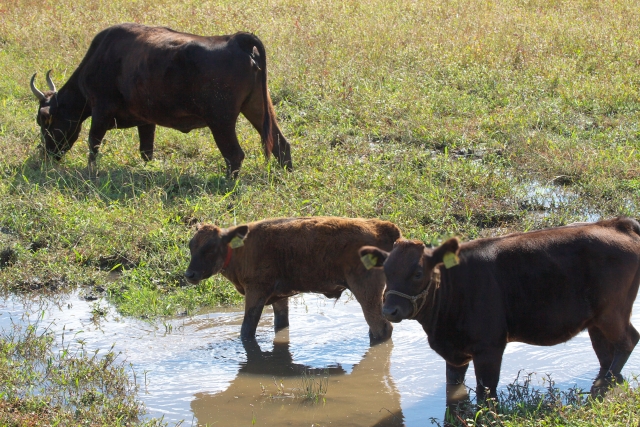
The Origins of Wagyu
From Japanese Cattle to the World-Famous Kobe Beef
When you enjoy a beautifully marbled Japanese Wagyu steak, have you ever wondered where it all began?
The story of Wagyu is much older and more complex than the famous names we see on restaurant menus today.
Kobe Beef, Omi Beef, Matsusaka Beef, and other regional Wagyu brands did not appear overnight.
They are the result of generations of cattle breeding, careful selection, regional traditions, and the dedication of Japanese farmers.
To understand Japanese Wagyu, it helps to go back to the beginning.
What Does “Wagyu” Actually Mean?
The word Wagyu (和牛) literally means “Japanese cattle.”
Today, the term officially refers to four recognized Japanese cattle breeds:
- Japanese Black (Kuroge Washu)
- Japanese Brown (Akage Washu)
- Japanese Shorthorn
- Japanese Polled
Among these, Japanese Black is by far the dominant breed in Japan’s premium Wagyu production.
Many famous brands, including Kobe Beef, Omi Beef, and Matsusaka Beef, are produced from Japanese Black cattle.
This is an important distinction:
Wagyu is not one single breed.
It is a group of recognized Japanese cattle breeds with a long history of selective breeding.
🐂 The Story of Japanese Black
Japanese Black cattle are particularly famous for their ability to develop fine intramuscular fat, creating the beautiful marbling associated with premium Japanese Wagyu.
Their bloodlines have been carefully maintained and improved over generations.
Farmers select cattle based on characteristics such as growth, meat quality, marbling, and lineage.
This long-term approach to breeding is one of the foundations of modern Japanese Wagyu.
The exceptional marbling you see on an A5 Wagyu steak is therefore not simply the result of how the animal was raised.
Genetics come first.
🏔️ What Is Tajima Cattle?
Now we come to one of the most important names in the story of Kobe Beef:
Tajima cattle.
Tajima cattle are Japanese Black cattle associated with Tajima, the northern part of Hyogo Prefecture.
The Tajima region is known for producing cattle with highly valued characteristics, and Tajima bloodlines have played an important role in the development of premium Wagyu.
Most importantly, Kobe Beef comes from cattle of the Tajima lineage.
This means that when you enjoy authentic Kobe Beef, you are experiencing a very specific branch of Japan’s Wagyu history.
Kobe Beef & Tajima Cattle — What’s the Connection?
This is a point that often causes confusion for international visitors.
Tajima cattle and Kobe Beef are not exactly the same thing.
Tajima refers to the cattle lineage and regional cattle tradition.
Kobe Beef is a certified brand of beef that must meet strict requirements.
Only beef from eligible Tajima-lineage Japanese Black cattle that satisfies the required standards can be officially certified as Kobe Beef.
So the relationship can be understood like this:
Japanese Black → Tajima lineage → eligible cattle → Kobe Beef
This is one reason the name “Kobe Beef” carries such a strong reputation around the world.
Is All Wagyu From Tajima Cattle?
No.
This is an important misconception.
Not all Japanese Wagyu comes from Tajima cattle.
Tajima lineage is particularly important to Kobe Beef, but Japan has many other Wagyu bloodlines and regional traditions.
For example, premium Wagyu from different regions can have different genetic backgrounds, production methods, and characteristics.
This diversity is one of the most fascinating aspects of Japanese Wagyu.
Rather than being one uniform type of beef, Wagyu is a world of different regional traditions and bloodlines.
From Local Cattle to Famous Wagyu Brands
Over generations, Japanese farmers and producers developed regional Wagyu traditions.
Different areas became known for their own cattle, production methods, and quality standards.
Eventually, these regional traditions became famous brands such as:
Kobe Beef — Hyogo
Omi Beef — Shiga
Matsusaka Beef — Mie
Today, these names are recognized around the world.
But behind every famous brand is a much longer story of cattle breeding, farmers, regional culture, and careful production.
Why Does Bloodline Matter So Much?
One reason Wagyu is so different from ordinary beef is the importance placed on bloodline and traceability.
Japanese Wagyu cattle are carefully registered and tracked.
Information about their lineage and individual identification allows producers and consumers to trace the history of the animal.
This traceability is an important part of Japan’s Wagyu system.
It also helps protect the reputation of famous regional brands.
When you see an authentic Wagyu brand name, you are not simply looking at a marketing label.
You are looking at a product connected to a specific production system and history.
💡 Did You Know?
Japan has developed one of the world's most detailed systems for identifying individual cattle.
Each registered Japanese cattle receives an individual identification number, allowing its production history to be traced.
This system helps support the authenticity and traceability of Japanese beef.
For international visitors, this is one of the fascinating differences between simply eating “beef” and experiencing a carefully documented Japanese Wagyu tradition.
Why Does This History Matter When You Eat Wagyu?
You may wonder:
Does knowing the bloodline really change the taste?
Not directly.
But understanding the history can change the way you experience the steak.
When you enjoy Kobe Beef, you are tasting the result of generations of selective breeding and careful production.
When you try Omi Beef, you are experiencing a different regional Wagyu tradition.
And when you compare different brands or cuts, you begin to understand that Japanese Wagyu is not simply about marbling.
It is about genetics, region, craftsmanship, and tradition.
From Tajima to Kobe, From Japan to the World
The story of Japanese Wagyu is not the story of one single breed or one single region.
It is a story of many bloodlines, generations of farmers, regional traditions, and continuous craftsmanship.
And within that larger story, Tajima cattle hold a particularly important place in the history of Kobe Beef.
The next time you enjoy a beautifully marbled Kobe Beef steak, take a moment to remember that you are tasting more than premium beef.
You are tasting a small part of a much longer Japanese story.
Discover the history.
Discover the craftsmanship.
Discover the story behind Japanese Wagyu.