
Kyoto Wagyu guide
Why Does Wagyu Have Such Beautiful Marbling?
Kyoto Wagyu Guide Vol.2
Why Does Wagyu Have Such Beautiful Marbling?
The Secret Behind Japan’s “Melt-in-Your-Mouth” Beef
When people around the world hear the word Wagyu, one image often comes to mind: beautifully marbled beef.
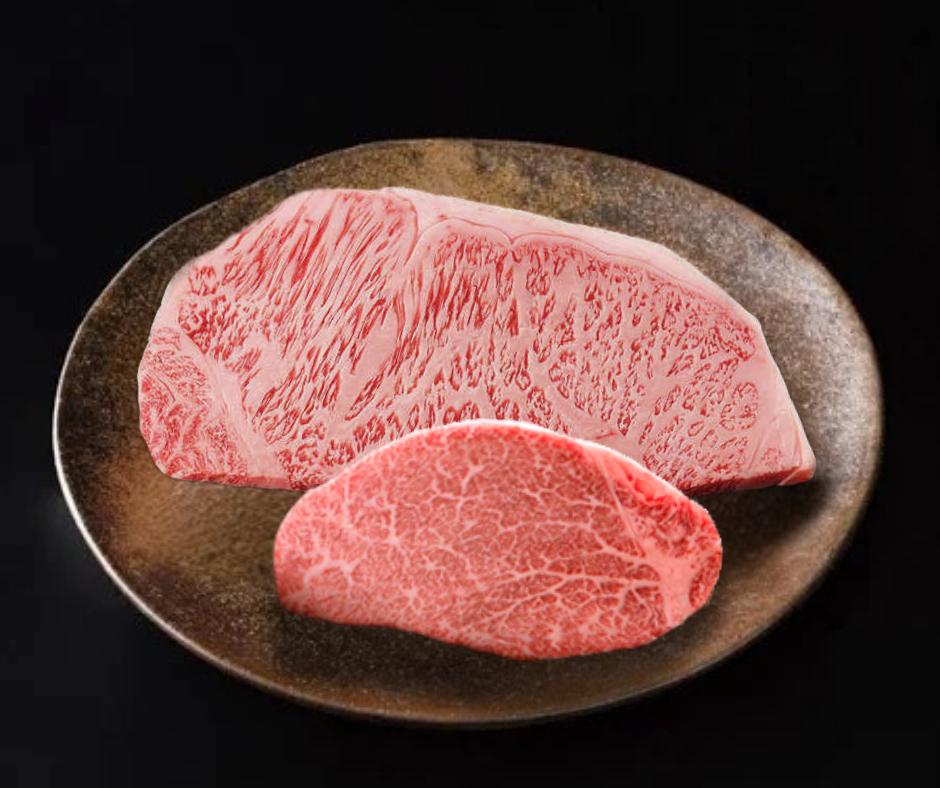
Those delicate white lines of fat running through the meat are called “shimofuri” (霜降り) in Japanese. They are one of the most distinctive characteristics of premium Japanese Wagyu.
But have you ever wondered:
Why does Wagyu have so much marbling? And why does it seem to melt in your mouth?
The answer lies in a combination of genetics, careful breeding, feeding, and the unique characteristics of Wagyu fat.
What Is Wagyu Marbling?
Marbling refers to the fine streaks and flecks of fat distributed inside the muscle, rather than around the outside of the meat.
This is called intramuscular fat.
In Japanese Wagyu, particularly Japanese Black (Kuroge Washu), this fat can be distributed exceptionally finely throughout the muscle, creating the beautiful pattern that resembles frost.
That is why Japanese people call it “shimofuri,” meaning “frost-like.”
But marbling is not only about appearance.
Fine marbling contributes to:
- Tenderness
- Juiciness
- Aroma
- Richness
- A smooth, buttery texture
This is one reason why premium Wagyu can provide such a different experience from an ordinary steak.
Why Does Wagyu Develop So Much Marbling?
One of the most important reasons is genetics.
Japanese Wagyu, especially Japanese Black cattle, has been selectively bred for generations.
Japanese farmers have carefully maintained bloodlines with characteristics that encourage fine intramuscular fat.
This does not happen simply because cattle are fed more.
The animal’s genetics play a fundamental role in determining how and where fat is stored.
That is why you cannot simply take an ordinary breed of cattle, feed it the same way, and expect it to become Wagyu.
Wagyu’s marbling begins with its genetics.
Does Feeding Affect Marbling?
Yes.
Genetics provide the potential, but careful feeding and raising practices are also important.
Japanese Wagyu cattle are raised over a long period, with farmers carefully managing their feed, environment, health, and growth.
The exact methods vary between farms and regions.
This is one reason different Wagyu brands can have their own unique characteristics.
Kobe Beef and Omi Beef, for example, can offer different flavor profiles even though both come from Japanese Wagyu.
The final experience is the result of genetics, feeding, raising methods, and the skill of the producer.
Why Does Wagyu “Melt in Your Mouth”?
This is one of the most fascinating characteristics of high-quality Wagyu.
Wagyu fat contains a high proportion of unsaturated fatty acids, including oleic acid.
These fats have a relatively low melting point compared with many other types of animal fat.
As a result, the fat softens easily with heat.
When you place a perfectly cooked piece of Wagyu in your mouth, the warmth helps release the fat and its aromas.
This creates the famous sensation that the steak “melts in your mouth.”
However, Wagyu should not simply be thought of as “fatty beef.”
The best Wagyu is about the balance of:
Marbling + Meat Flavor + Texture + Aroma
That balance is what makes the experience special.
Is More Marbling Always Better?
Not necessarily.
This is an important point for anyone discovering Japanese Wagyu for the first time.
A5 is Japan’s highest beef quality grade, and marbling is one of the factors considered in grading.
But more fat does not automatically mean better taste for everyone.
Some people love the luxurious richness of highly marbled sirloin.
Others prefer leaner cuts with a stronger beef flavor and more satisfying texture.
Different cuts create different experiences.
Sirloin
Rich, tender, and beautifully marbled.
Tenderloin / Chateaubriand
Exceptionally tender with a more delicate flavor.
Leaner Cuts
Less fatty, but often with a more concentrated beef flavor and satisfying texture.
Exploring different cuts is one of the best ways to understand the diversity of Wagyu.
How Should You Cook Highly Marbled Wagyu?
Because premium Wagyu contains fine marbling, cooking it correctly is important.
Our chef generally recommends Rare to Medium Rare for premium Wagyu.
This allows the meat to remain tender while the marbled fat melts gently and releases its aroma.
However, there is no single “correct” way to enjoy Wagyu.
At YAKINIKU STEAK IWAI, our chef prepares each steak to bring out the best qualities of the cut, and guests can continue cooking it on our special heated stone plate according to their preference.
A 100% Gluten-Free Wagyu Experience
At YAKINIKU STEAK IWAI, gluten-free is not simply an option on the menu.
All food served at our restaurant is 100% gluten-free.
From our steaks and seasonings to our sauces and dressings, every food item is carefully prepared without gluten.
This allows guests with celiac disease to enjoy authentic Japanese Wagyu with greater peace of mind.
Most importantly, we never compromise on flavor for the sake of being gluten-free.
We carefully developed our sauces, dressings, and seasonings so that guests can enjoy the full richness and depth of Japanese Wagyu without sacrificing taste.
Our 100% gluten-free food is not only for guests who need to avoid gluten. It is also an appealing choice for travelers who are conscious of what they eat and want a carefully prepared dining experience in Kyoto.
At YAKINIKU STEAK IWAI, we believe everyone should be able to enjoy authentic Japanese Wagyu without having to choose between great taste and a 100% gluten-free dining experience.
💡 Did You Know?
The Japanese word “shimofuri” (霜降り) refers to the appearance of frost.
The delicate white marbling resembles frost scattered across the meat, making it one of the most recognizable visual symbols of premium Japanese Wagyu.
Experience Japanese Wagyu in Kyoto
At YAKINIKU STEAK IWAI, near Nijo Castle in Kyoto, we specialize in carefully selected A5 Kuroge Wagyu, including premium Kobe Beef and Omi Beef.
Each steak is prepared by our chef and served on a special heated stone plate designed to retain heat, allowing guests to enjoy the steak warm until the final bite.
We recommend trying premium Wagyu first with a little salt, then wasabi and salt, before experiencing it with our original sauces.
This simple tasting sequence allows you to discover how the flavor of the same Wagyu changes with each seasoning.
Wagyu Is More Than Marbling
When you look at a beautifully marbled Wagyu steak, you are seeing more than just fat.
You are seeing the result of genetics, breeding, feeding, care, time, and craftsmanship—a tradition passed down through generations.
And when that beautiful marbling gently melts in your mouth, you are experiencing one of the characteristics that has made Japanese Wagyu famous around the world.
That is the true beauty of Wagyu.